2025-08-19
12 Most Common Part-ML Audit Findings for Owner-Managed Aircraft
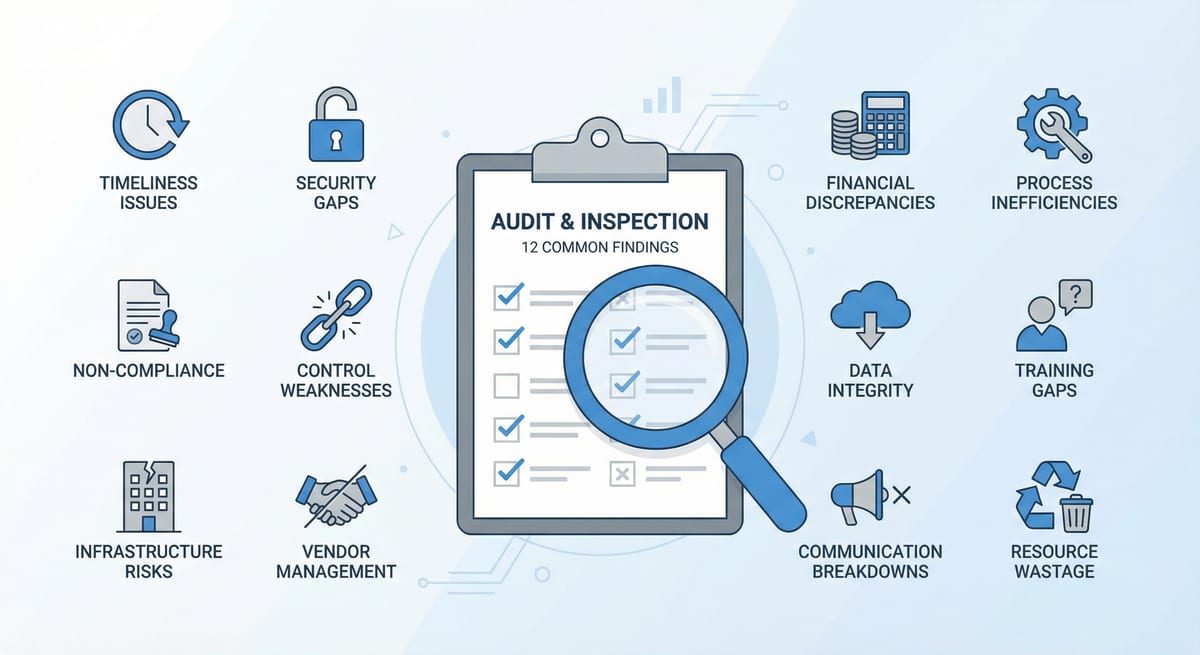
Competent authorities and contracted CAMOs audit owner-managed aircraft under Part-ML to verify that the AMP, AD compliance, maintenance records, and component tracking meet the requirements. This article lists 12 of the most common findings in such audits and gives practical mitigation steps. If you declare your own AMP or manage continuing airworthiness without a CAMO, use this as a checklist to close gaps before an inspection and to keep your documentation audit-ready.
For an overview of the responsibilities and records behind this checklist, see the EASA Part-ML guide for owner-pilots.
1. Regulatory Context
Under Part-ML, the owner is responsible for continuing airworthiness (ML.A.201) and for maintaining the aircraft in accordance with an approved or declared AMP (ML.A.302). Competent authorities and, where applicable, contracted CAMOs perform audits and oversight to verify compliance. Findings are raised when the AMP, AD compliance, maintenance records, or component tracking do not meet the requirements.
The legal basis is Commission Implementing Regulation (EU) No 1321/2014 (Part-ML). EASA’s continuing airworthiness and Part-ML regulation define what is checked. Auditors look at AMP adequacy, AD status, CRS and tech log completeness, and life-limited part records.
2. Practical Examples (12 Common Findings)
-
AMP not declared or not available. The owner operates without a clear, declared AMP (ML.A.302(e)) or cannot produce the current AMP at audit. Mitigation: Declare the AMP in writing, retain the current version, and keep it accessible. See How to Properly Declare an AMP.
-
AMP below MIP. The AMP omits tasks or intervals required by the Minimum Inspection Programme (MIP). Mitigation: Ensure the AMP includes all MIP tasks and is not less restrictive. See MIP vs ICA.
-
No or inadequate AD applicability and tracking. Applicable ADs are not identified, or compliance status and dates are not recorded. Mitigation: Maintain an AD applicability list and compliance log; comply within the required time. See Overdue AD and AD vs SB.
-
Overdue AD. An applicable mandatory AD is past its compliance date and not deferred in accordance with the AD/regulation. Mitigation: Track AD due dates; complete or formally defer before the compliance date.
-
Incomplete or vague CRS. The Certificate of Release to Service does not clearly state the work performed (e.g. “Inspection done” without task or AD reference). Mitigation: Agree scope with the engineer; require CRS to list tasks/ADs. See What Does a CRS Really Mean?.
-
Missing maintenance records. CRS, work orders, or tech log entries are missing or not retained for the required period. Mitigation: Retain all maintenance and release records; file every CRS and supporting document.
-
Pilot-owner tasks outside AMP scope. Tasks signed by the pilot-owner are not listed in the AMP as pilot-owner tasks. Mitigation: Only sign tasks that are explicitly in your AMP. See Pilot-Owner Maintenance ML.A.803.
-
Pilot-owner entries not documented. Pilot-owner work is performed but not recorded in the tech log (date, task, signature). Mitigation: Record every pilot-owner task in the tech log or approved equivalent.
-
Component life limits not tracked. Life-limited parts or overhaul times are not recorded or are exceeded. Mitigation: Include component tracking in the AMP and maintain a component log with times/limits.
-
AMP not followed. The actual maintenance performed does not match the AMP (e.g. different intervals, tasks skipped). Mitigation: Perform and document maintenance strictly in accordance with the declared/approved AMP.
-
Unclear AMP ownership when using an engineer. The division between owner (AMP, AD, records) and engineer (perform and release work) is blurred; records or AD status are missing. Mitigation: Define roles clearly; you own AMP and AD tracking. See Working with a Part-66 Engineer.
-
No revision control for AMP. The AMP is updated but there is no version/revision date or retention of previous versions. Mitigation: Version the AMP, date revisions, and retain superseded versions for the required period.
3. Risk Mitigation Steps
- AMP: Declare and retain a complete AMP (MIP + ICA where applicable); version and control revisions. See Declared AMP and MIP vs ICA.
- ADs: Establish applicability, maintain a compliance log, and comply (or defer per AD/regulation) before due date. See Overdue AD and AD vs SB.
- CRS and records: Ensure every maintenance event is released with a clear CRS (or pilot-owner record) and that all records are retained. See CRS meaning.
- Pilot-owner: Only perform and sign tasks in the AMP; document every task. See Pilot-Owner Maintenance.
- Components: Track life-limited parts and overhaul times in a component log; do not exceed limits.
- Roles: Keep owner (AMP, AD, records) and engineer (perform and release) responsibilities clear. See Working with Part-66 Engineer.
4. Audit Preparation Checklist
- AMP — Current version available; declared (or approved) in accordance with ML.A.302(e); includes MIP and ICA where applicable; version and revision date shown.
- AD status — Applicability list and compliance log up to date; no overdue mandatory ADs; evidence of compliance (CRS or records) for each applicable AD.
- CRS and maintenance records — All maintenance releases (CRS and pilot-owner) on file; tech log complete; work orders and supporting documents retained.
- Component times and limits — Component log or equivalent with life-limited parts and overhaul times; no limits exceeded.
- Pilot-owner tasks — Only tasks from the AMP’s pilot-owner list performed and signed; each task recorded (date, task, signature).
- Defects and deferrals — Open defects and any deferrals documented and in accordance with AMP/MEL.
- Roles and contracts — If using CAMO or maintenance organisation, contracts and responsibilities clear; you can demonstrate ownership of AMP and AD tracking.
5. FAQ
What do auditors look at first?
Typically the AMP (does it exist, is it declared/approved, is it complete and current?) and AD status (applicability and compliance). Then maintenance records (CRS, tech log) and component tracking. Incomplete AMP or AD tracking are among the most frequent findings.
How can I prepare for an audit?
Use the checklist above. Ensure the AMP is declared, complete, and followed; AD applicability and compliance are documented; all CRS and pilot-owner entries are on file; component limits are tracked; and you can explain who owns the AMP and AD compliance. Keep records in one place and available for inspection.
Summary: The 12 findings covered here — from AMP not declared or below MIP to AD tracking gaps, vague CRS, missing records, pilot-owner scope issues, and unclear roles — are among the most frequent in Part-ML audits. Address each with the mitigation steps and use the audit preparation checklist so your documentation is complete and defensible.
Get insights like this in your inbox
Product updates and practical guides for aircraft owners — no spam, unsubscribe any time.
This content is informational. It is not legal advice. The owner remains responsible under Part-ML. Articles on this blog are created with the assistance of AI and are reviewed for accuracy; we recommend verifying regulatory details with official sources.